
What it is
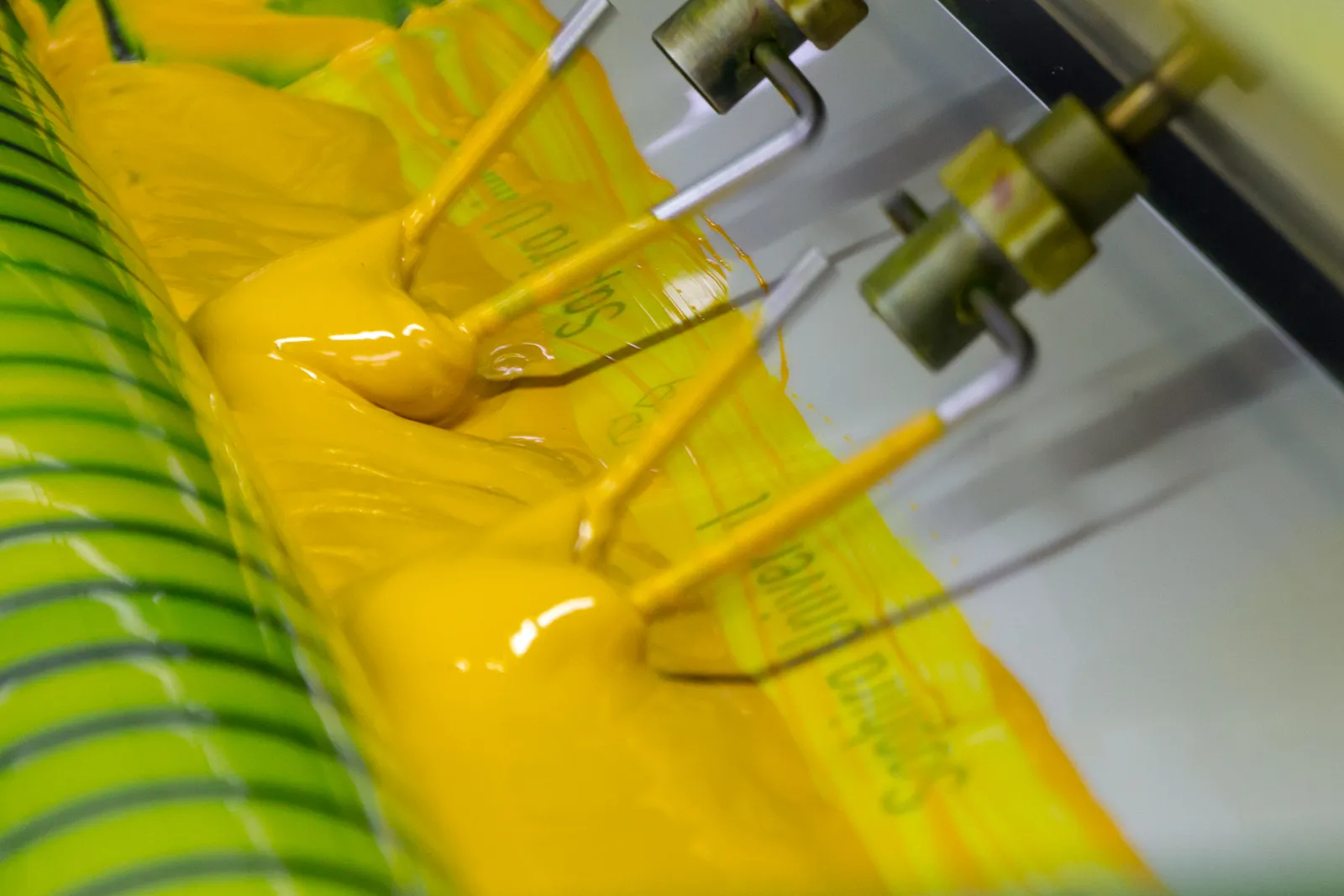
Spot UV varnish, also called varnish in register, lays a transparent layer only on the areas drawn for it. The varnish is liquid when applied and cures in a fraction of a second under UV lamps: it does not dry by evaporation, it hardens by chemical reaction. That is why it comes off the press already finished, with a compact, resistant film. The shape is drawn by the application system: in line, a photopolymer plate or a shaped blanket is mounted on the coating unit and carries varnish only where the form stands proud, exactly like an extra colour.
The other route is screen printing, which pushes the varnish through a screen whose mesh is open only in the areas of the design. The deposit is different: screen printing lays down a much thicker layer, so the varnish can be felt and builds a slight relief over the print, while the in-line unit leaves a thin, even film. Screen printing is also the way to special-effect varnishes, those loaded with granules, glitter or texture. In both cases the result depends not only on the varnish but on the surface underneath: the contrast comes from the difference between the varnished and the unvarnished area, so a background that is already glossy cancels half the effect.
How to prepare the file
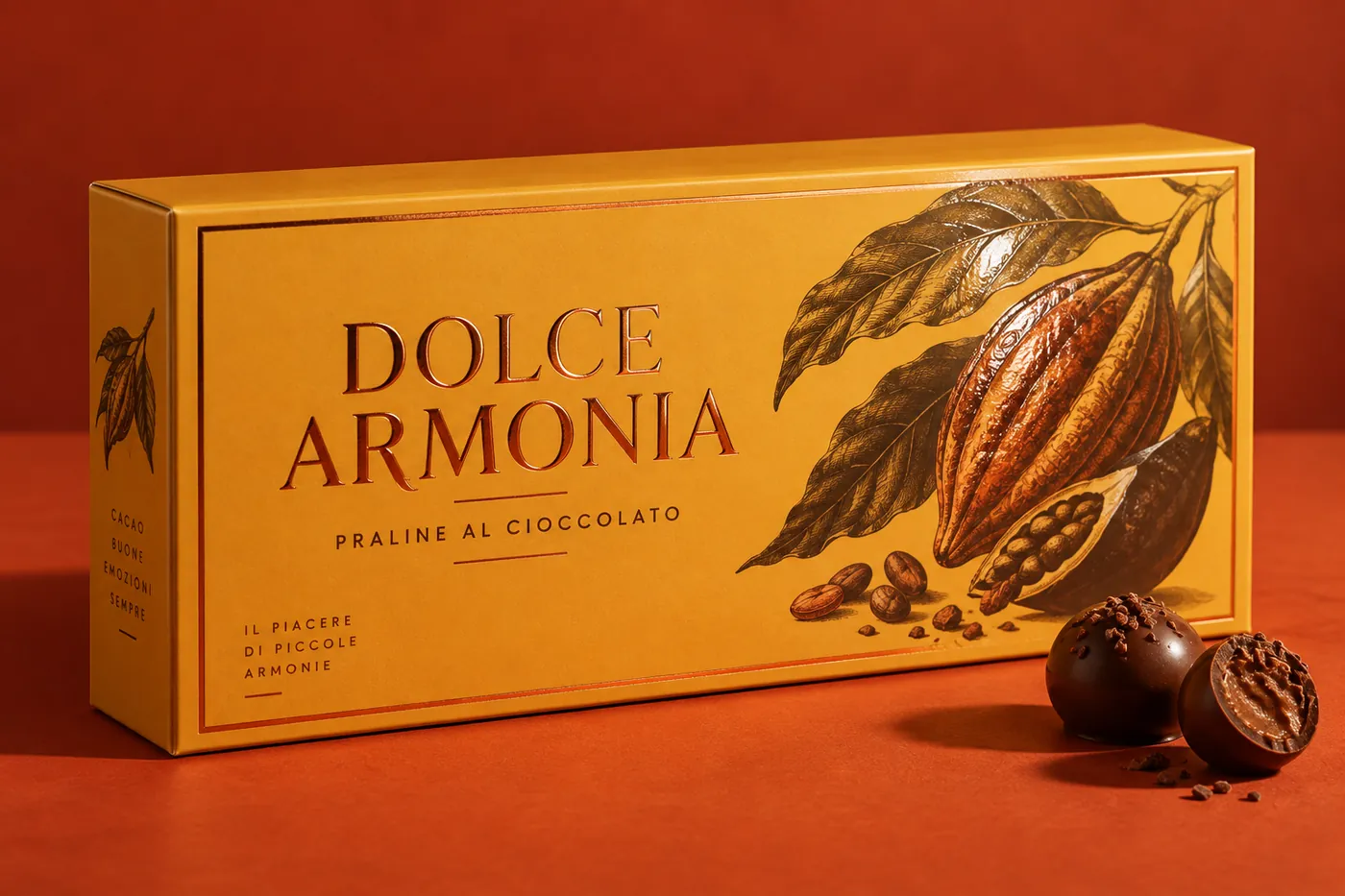
- A dedicated spot channel (UV VARNISH, for example), vector, at 100% and set to overprint, with a name that leaves no doubt about which area is varnished.
- The varnish is treated as an on-or-off switch: screened tints and graduated deposits are possible only if decided in advance and tested, otherwise they give results different from those expected on screen.
- A register tolerance is allowed for between print and varnish: as a rule the varnish shape is kept slightly smaller than the printed element, a choke, so that any deviation does not leave an uncovered edge. The amount of choke is to be agreed at prepress stage.
- No varnish on glue flaps or on creases: in the first case the glue does not hold, in the second the cured film cracks at the fold.
- If the piece also carries foil or embossing, the order of the passes is defined at prepress stage: UV varnish is a closed surface and changes the behaviour of whatever goes on top of it.
What can go wrong
- The contrast depends on the surface underneath, not on the varnish. On an already glossy coated paper one more gloss is barely legible: the effect lives on matt lamination, on matt paper or set against a matt-varnished area.
- Uncoated papers absorb: the varnish sinks in and the gloss is dulled. On these substrates a base coat is needed, or the result is accepted as satin rather than mirror-like.
- A thick screen-printed deposit is rigid: it cracks if it crosses a fold, and over very large areas it stiffens the piece. It is also a base that hot foil struggles to grip, so the foil goes on first.
Frequently asked questions
- What is the difference between spot UV varnish and drip-off?
- Spot varnish has a form of its own and a deposit that can be made thick, even tactile. Drip-off obtains the gloss-matt contrast in a single pass, using two varnishes that repel each other, with a subtler effect but with the perfect register of the press.
- Can the whole surface be varnished instead of one area?
- Yes, and that is flood varnishing: it protects and evens out the surface. But if it is flooded there is no contrast, and so no spot effect. The two often coexist: a protective flood varnish over everything and varnish in register where the emphasis is needed.
- Can anything be printed or glued over UV varnish?
- Not well. The cured surface is closed: inks, glues and foils find nothing to grip. That is why the gluing areas are kept varnish-free and the order of the passes is decided in advance, not once the job is running.