
What it is
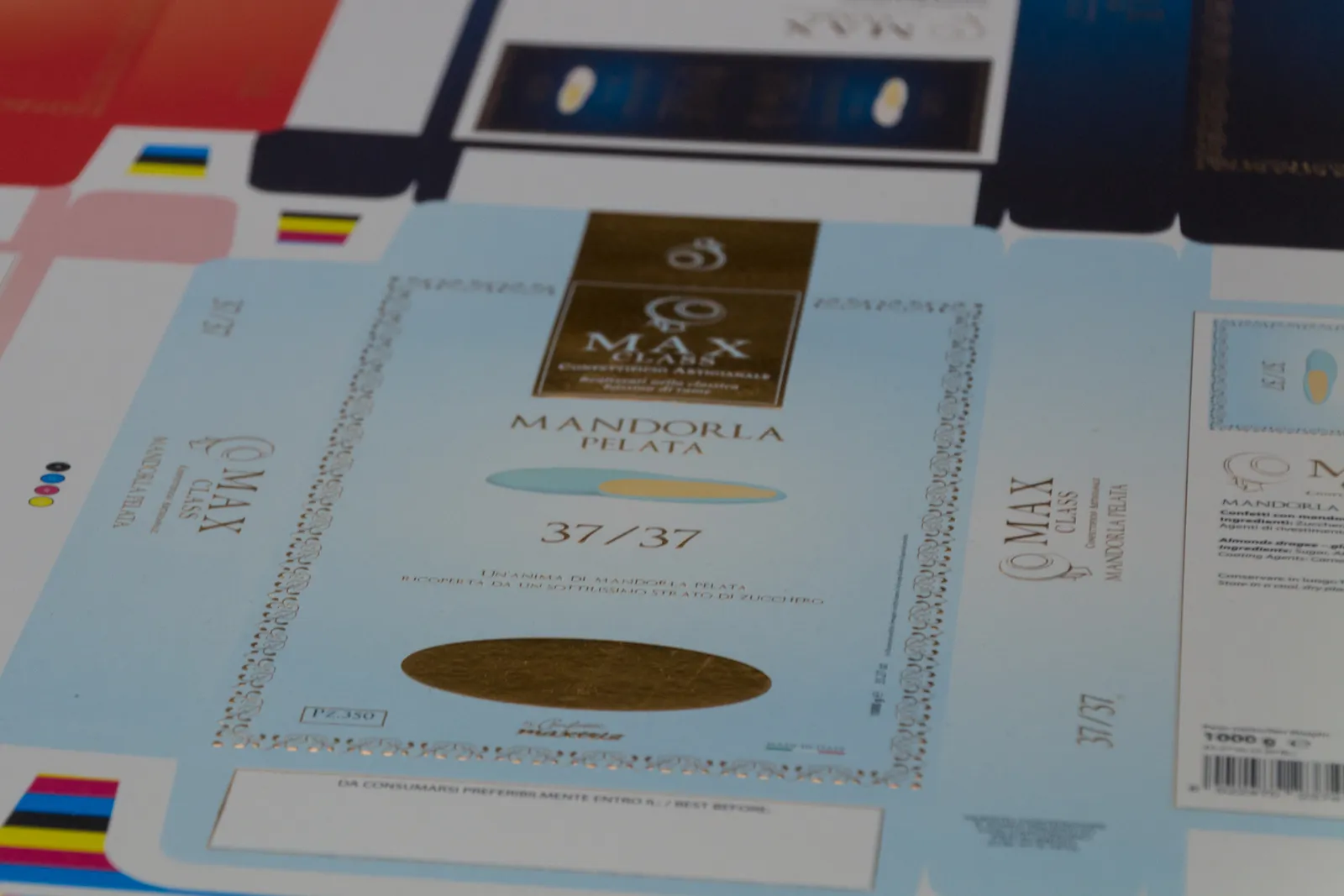
To laminate is to bond a very thin film to the printed sheet, over the whole surface. The film is a polymer supplied in reels, generally polypropylene or polyester, and it is bonded either with a heat-activated adhesive already present on the film itself or with a glue applied at the time. Sheet and film pass together between a heated cylinder and a counter-pressure cylinder: heat and pressure activate the adhesive and the two layers become one. From that moment the visible surface is no longer the paper but the film, with all that follows from it.
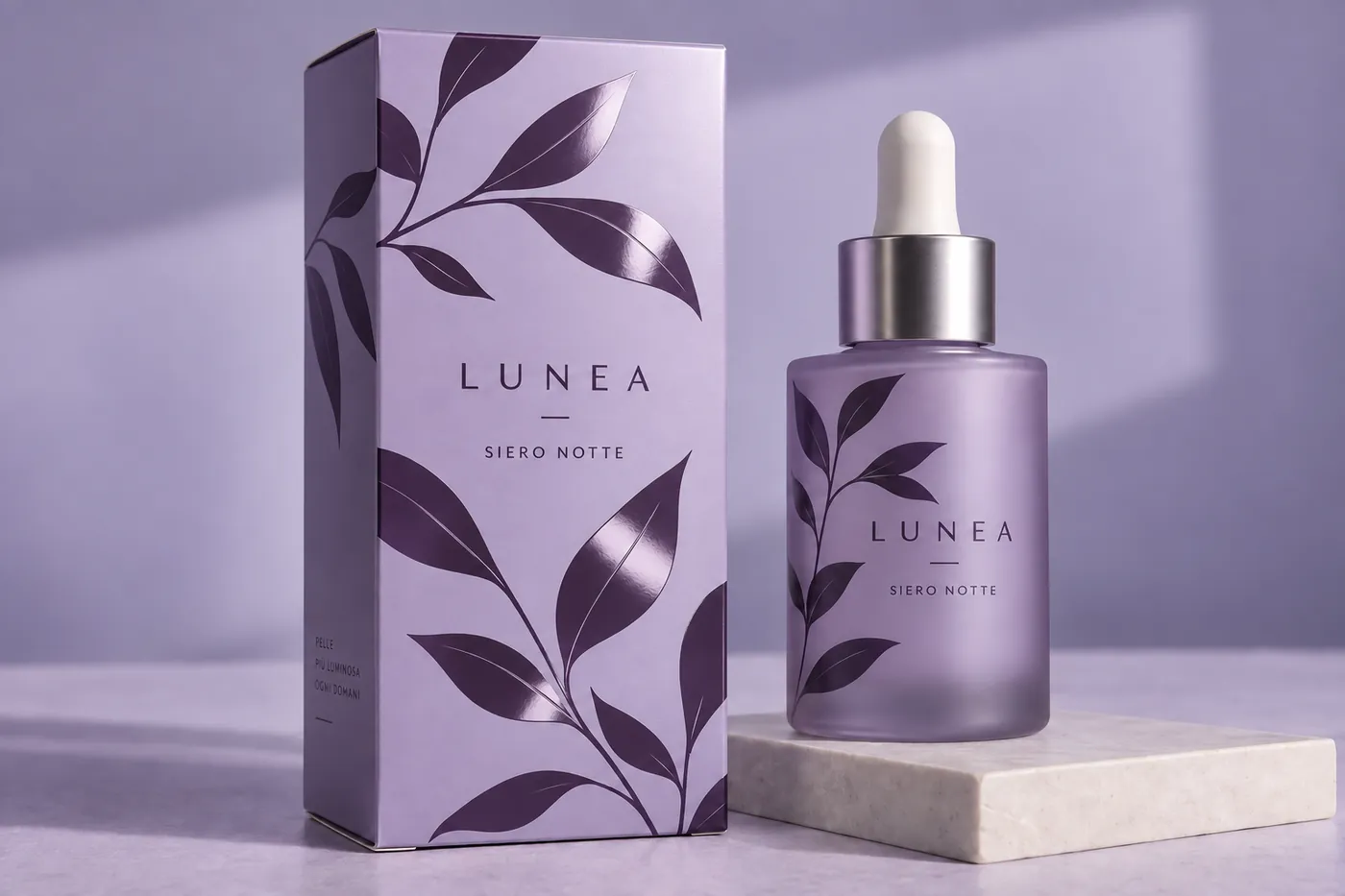
The finishes change the character of the piece completely. Gloss film raises contrast and saturates colours, because it reflects specularly. Matt film does the opposite: it diffuses light, lowers gloss and makes colours deeper but less vivid, with blacks turning more velvety. Soft-touch is a film with a micro-structured surface: it feels like peach skin or velvet, and visually it behaves like a very pronounced matt. Technical variants exist for the known limitations, such as scuff-resistant films and films that hide fingerprints, and films designed to weigh less on the recycling stream. Besides protecting against abrasion and moisture, lamination stiffens the sheet slightly and creates the base on which varnish in register and foil both work well.
How to prepare the file
- Lamination does not occupy a channel in the file, but it is declared on the order and on the colour proof: it is a production choice with direct visual effects.
- A proof or a sample that takes the chosen finish into account is worth asking for. Matt and soft-touch dampen saturation: a colour approved on bare paper will not be the same once the job is finished.
- Film-free reserves are allowed for on the glue flaps, or else films and glues compatible with gluing are agreed: this is the most common cause of cartons that come open.
- Whether foil, varnish or embossing will come on top of the lamination is stated in advance: films and adhesives are chosen partly according to what follows.
- The behaviour at the fold is checked on the stiffer boards and on dark backgrounds, because that is where the film shows the strain on the crease.
What can go wrong
- On dark backgrounds, matt and soft-touch show fingerprints and scuff marks with irritating ease. It is a characteristic of the material, not a fault in the work: if the piece is going to pass from hand to hand, a scuff-resistant film is worth considering.
- Glue does not hold on untreated film. If a carton has to be glued, the flaps are left clear or the film is chosen and treated accordingly: it is a decision to take beforehand, because there is no recovering it downstream.
- The bonded film weighs on the recyclability of the board and, for food contact, the suitability of the material has to be verified like that of any other component. On a sustainable project lamination is discussed, not taken for granted.
Frequently asked questions
- Is it better to laminate or to varnish?
- Varnish is a thin layer that protects and stays within the paper stream. Lamination is a film that protects far more and allows effects, such as soft-touch, that varnish cannot give. The choice depends on how much the piece will be handled and on how much weight the recycling question carries.
- Does soft-touch really scratch?
- It marks, above all on dark, even backgrounds: fingerprints and light scratches stay visible because the surface is matt and uniform. There are films designed to reduce the problem. If the product is handled a great deal, testing them first is the sensible route.
- Is a laminated folding carton recyclable?
- The added film complicates separation compared with a varnished board. Much depends on the thickness of the film, on the type of polymer and on the rules of the collection stream it ends up in. It is an assessment to make on the individual product, together with whoever places it on the market.