
Processes
IML labels: what they are, how they work, and when they beat adhesive labels
by Giovanni Pietropaolo
Anyone working in packaging comes across the acronym IML, In-Mould Labelling, quite often. With this technology the label is born together with the container instead of being applied afterwards. A difference that affects the production process, the durability of the decoration, and how the package is designed for recycling.
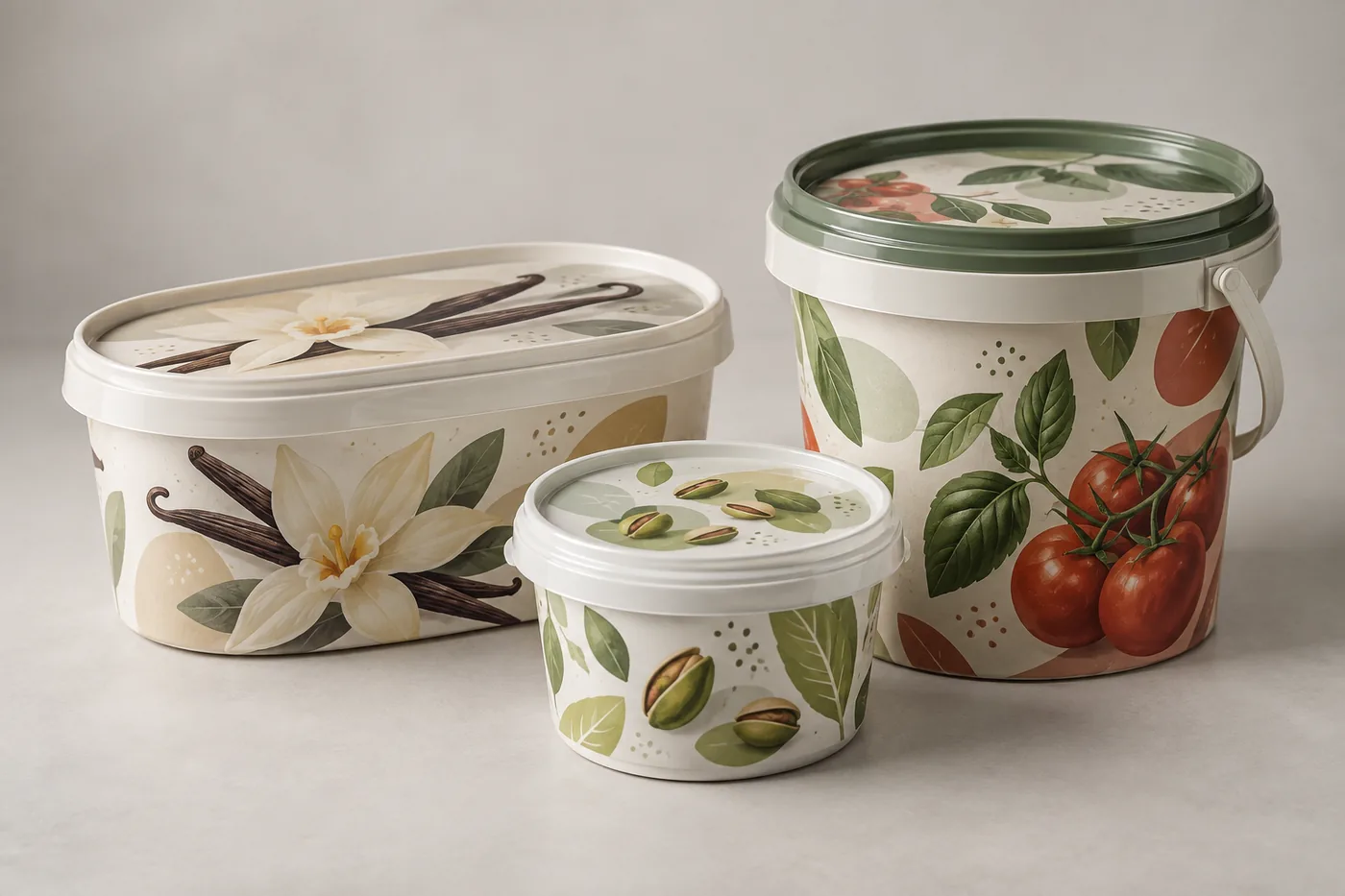 With IML the artwork is integrated into the container wall during moulding, not applied afterwards.
How IML labelling works
The label is printed on a thin plastic film and cut to the shape required for the container. In injection moulding, a robot places it inside the mould, where it is held in place by an electrostatic charge or a vacuum system. The mould closes and receives the molten plastic: heat and pressure make the label bond to the material as the container takes shape.
The part leaves the mould already decorated, with no later label-application step. To go deeper into the materials and characteristics of the process, see our IML – In-Mould Labelling data sheet.
What changes compared to an adhesive label
A self-adhesive label is applied to an already-formed container and sticks to the surface thanks to an adhesive. With IML, instead, the film integrates with the container during moulding. This integration offers high resistance to moisture and to the stresses of everyday use. It is an appealing advantage for packs kept in the fridge or freezer, or frequently handled with wet hands.
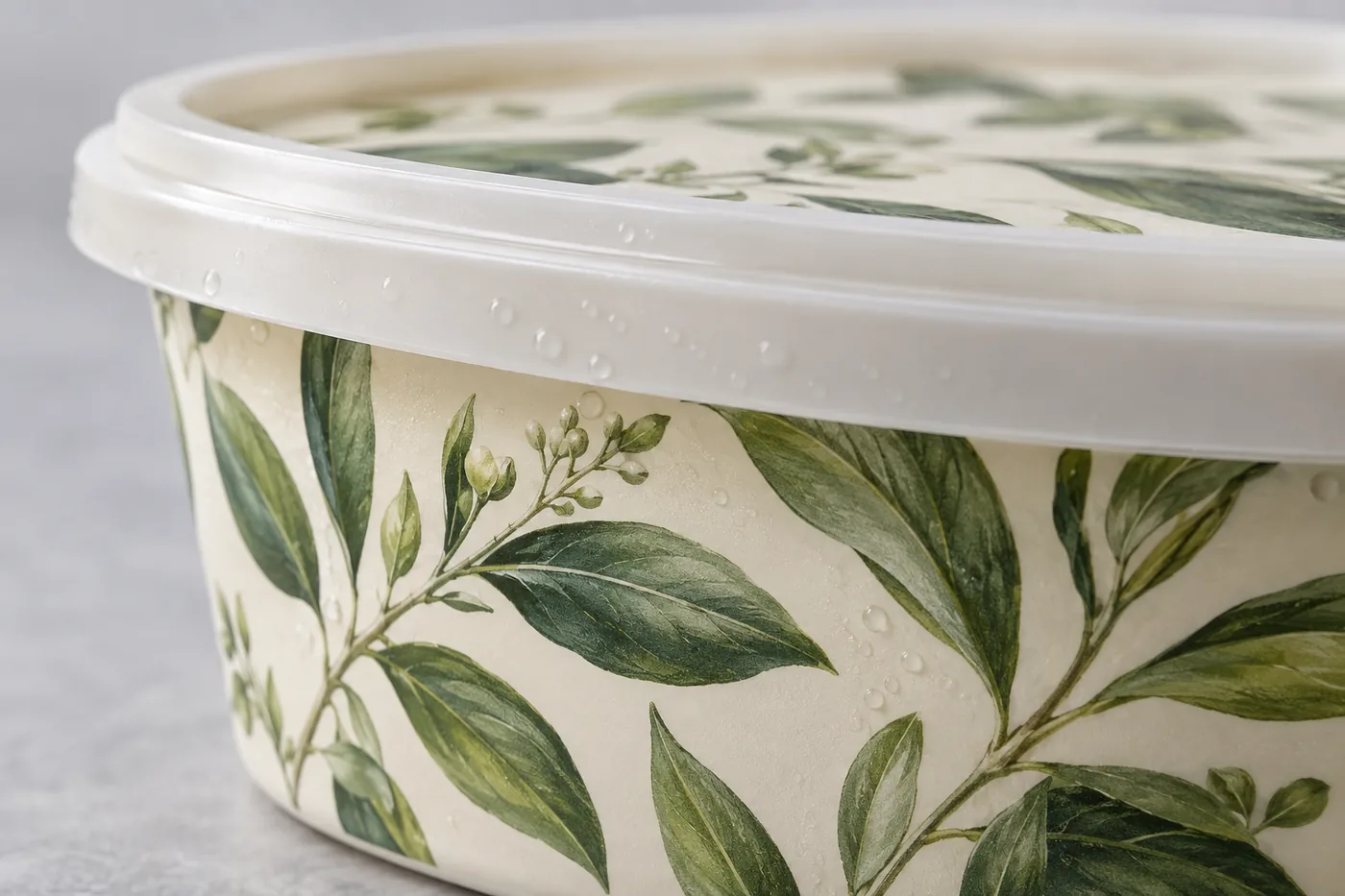 The decoration is part of the container: water and condensation don’t peel anything off.
Adhesive labels, too, can be engineered for demanding conditions. The right facestocks, adhesives and finishes let them cope with cold, condensation and contact with water. The choice therefore depends on the performance required, on the container and on the production process.
Materials and recycling: what to consider
When the label and the container are made of the same polymer — for example polypropylene on polypropylene — IML can help achieve a mono-material structure, favourable to recycling compatibility. This, however, does not automatically make any pack recyclable. The whole package has to be considered: inks, any barriers, lids and other components, as well as the collection, sorting and recycling systems available. The same criterion applies to adhesive labels: their recycling compatibility depends on the combination of container, facestock and adhesive.
End of life must be assessed on the complete package.
When IML makes sense and when adhesive does
Adhesive labels offer great flexibility. They are often suited to short runs, many graphic variants, and projects that use containers already available, without touching the moulding process. IML, on the other hand, requires a mould and a production system set up to insert the label. Its cost-effectiveness depends on volumes, on the continuity of orders, on formats and on the equipment already in place: it tends to emerge above all on medium-to-high, continuous production. Typical applications include tubs and pails for ice cream, sauces, cheeses and spreadable products, plus containers for cosmetics and household cleaning. In these sectors, integrating the decoration can offer advantages both in production and during the use of the pack.
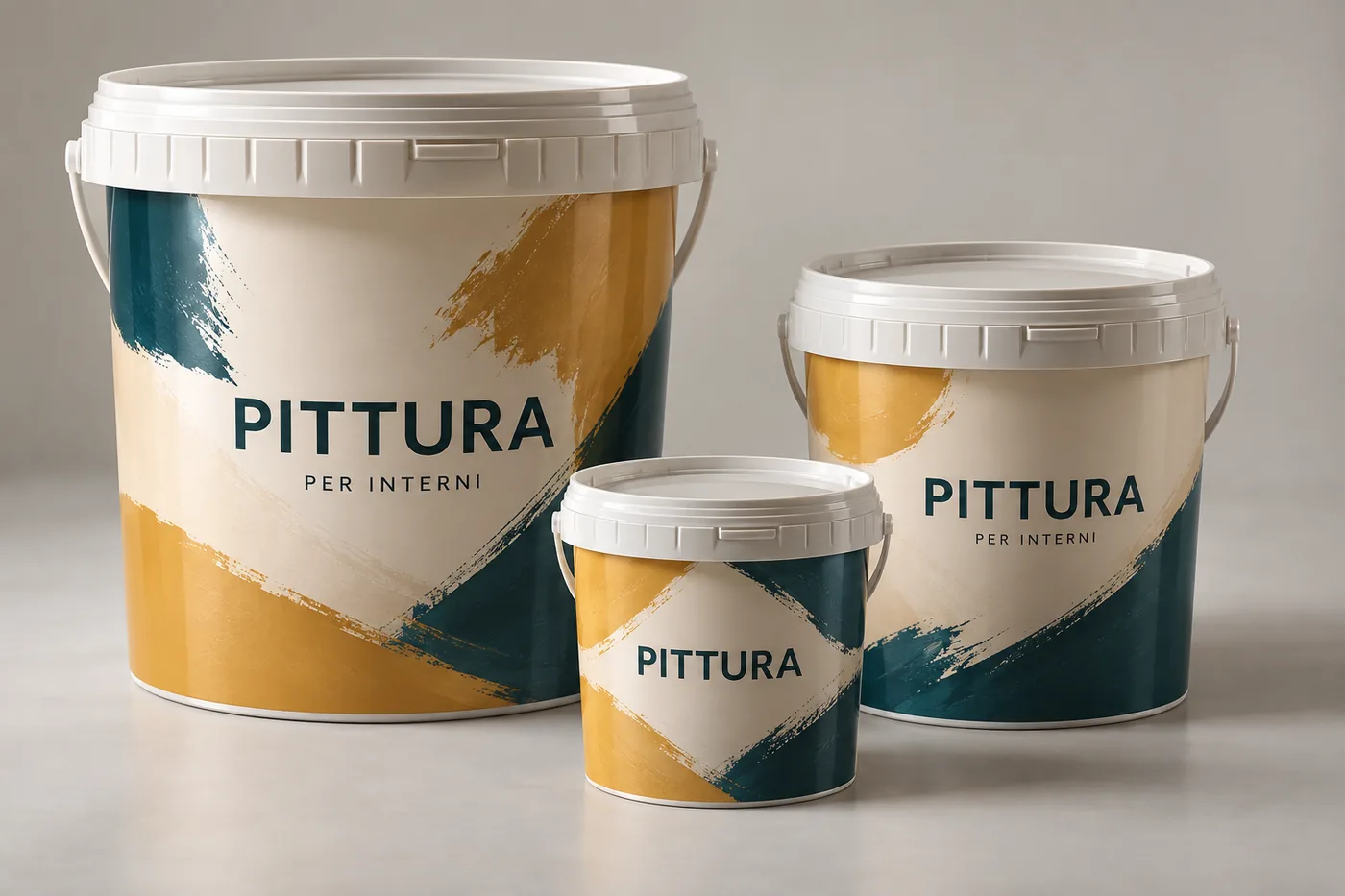 In-Mould Labelling on polypropylene containers, from small formats to larger ones.
To choose, it helps to start from four questions:
- How many containers need to be produced, and how often?
- How many graphic variants are planned?
- What temperatures, substances and stresses will the pack be exposed to?
- Is the container already defined, or does it still have to be designed?
Label quality is born in printing
Whether it is IML or an adhesive label, photographs, solid colours and fine detail require a controlled printing process, able to keep colour and definition consistent from one run to the next. UV LED offset printing can also be used on films suitable for IML. The fast curing of the inks makes it possible to move on to the next steps without the drying times of conventional inks. The result depends on the correct combination of substrate, inks and printing conditions. For IML, these elements must also be chosen according to the stresses the label will undergo during moulding.
Designing artwork, label and container together
With IML, the shape of the container and the characteristics of the mould influence the label’s outline and the placement of the graphics. That is why it helps to involve the brand, the container maker and the label printer from the very start. Working together makes it possible to define materials, dimensions and production constraints before approving the artwork, reducing the risk of changes at later stages.
Are you considering IML for food, cosmetic or household-cleaning packaging? Discover Grafica Nappa’s IML labels service, or write to us to discuss the materials, graphics and production needs of your project.