
Processes
Offset or digital printing for packaging? How to choose
by Giovanni Pietropaolo
When designing a package — especially a folding carton or a cardboard box — one of the first questions is: offset or digital printing? The choice depends on the project: how many copies are needed, how many graphic variants are planned, which substrate you want to use, and what finishing steps will complete the pack. Considering these elements together lets you compare costs and results in concrete terms.
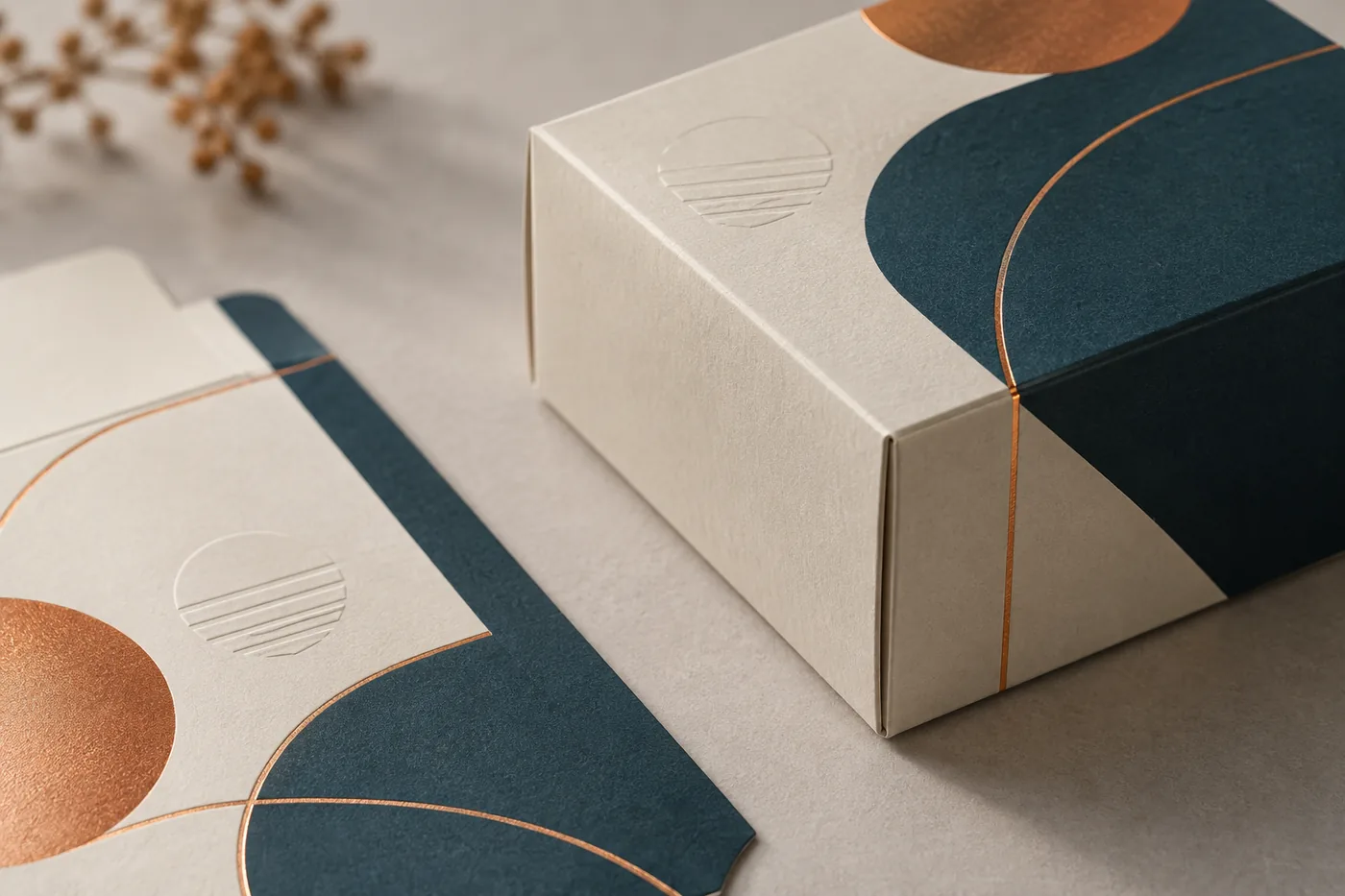 Printing is only the first step: die-cutting, finishes and gluing follow on the carton.
The difference between offset and digital
In offset printing, the image is prepared on a plate for each colour. The plate transfers the ink to a rubber-covered cylinder, which in turn transfers it to the substrate. Digital printing, instead, starts from the file and does not require fixed plates for each subject. The way the image is transferred changes with the machine, but the common advantage is the ability to update the printed content without preparing new plates.
This difference affects the initial costs, the management of variants and the cost-effectiveness of different run lengths.
How costs change with quantity
Offset involves preparation costs: plate production, machine set-up, colour adjustment and print-colour registration. These costs are spread across the whole run: as copies increase, their impact on the single piece decreases. Digital generally requires a less demanding initial set-up. File checks, machine settings and print verifications are still needed, but the absence of plates often makes it cost-effective for small quantities and frequent orders. In digital too, the overall unit cost can fall as copies increase, though with a cost structure different from offset’s.
There is no quantity above which offset always wins. The break-even point changes with format, substrate, colours, number of subjects and the characteristics of the machines used. In packaging, moreover, the comparison must concern the finished pack: material, waste, finishes, die-cutting and gluing can weigh on a project’s cost-effectiveness as much as printing does.
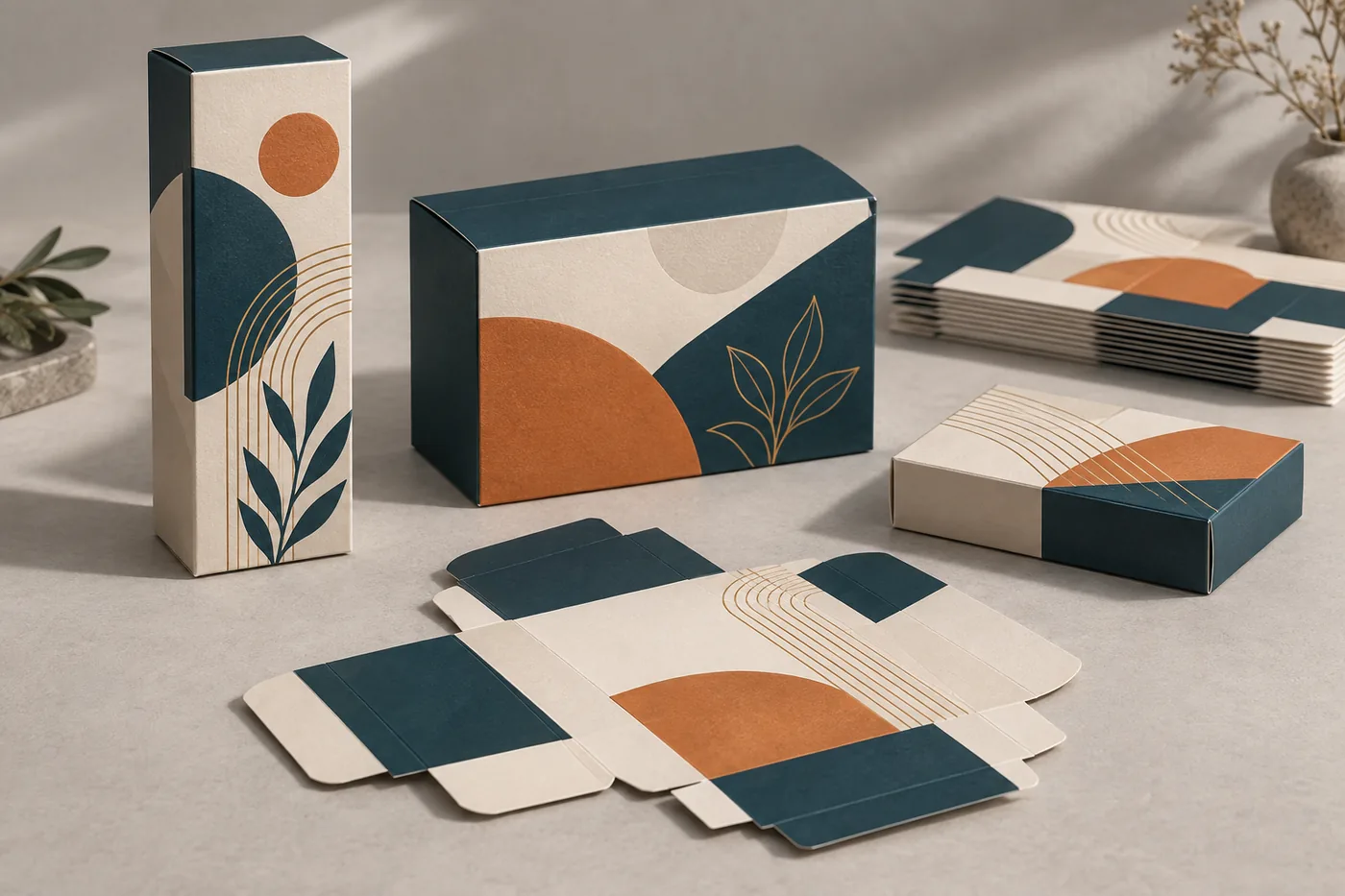 In packaging, the offset-versus-digital comparison is about the finished pack, not just the printing.
Graphic variants and personalisation
Offset is particularly suited to reproducing the same subject across many copies. It can also handle several variants, arranging them on the sheet or through plate changes and dedicated set-ups. Digital offers greater flexibility when content changes often. It allows names, codes, text and images to be modified even from one copy to the next, without replacing plates. It is therefore an interesting solution for personalised packs, limited editions, many SKUs with small quantities each, and reprints on demand. It can be used both for samples and tests and for final production.
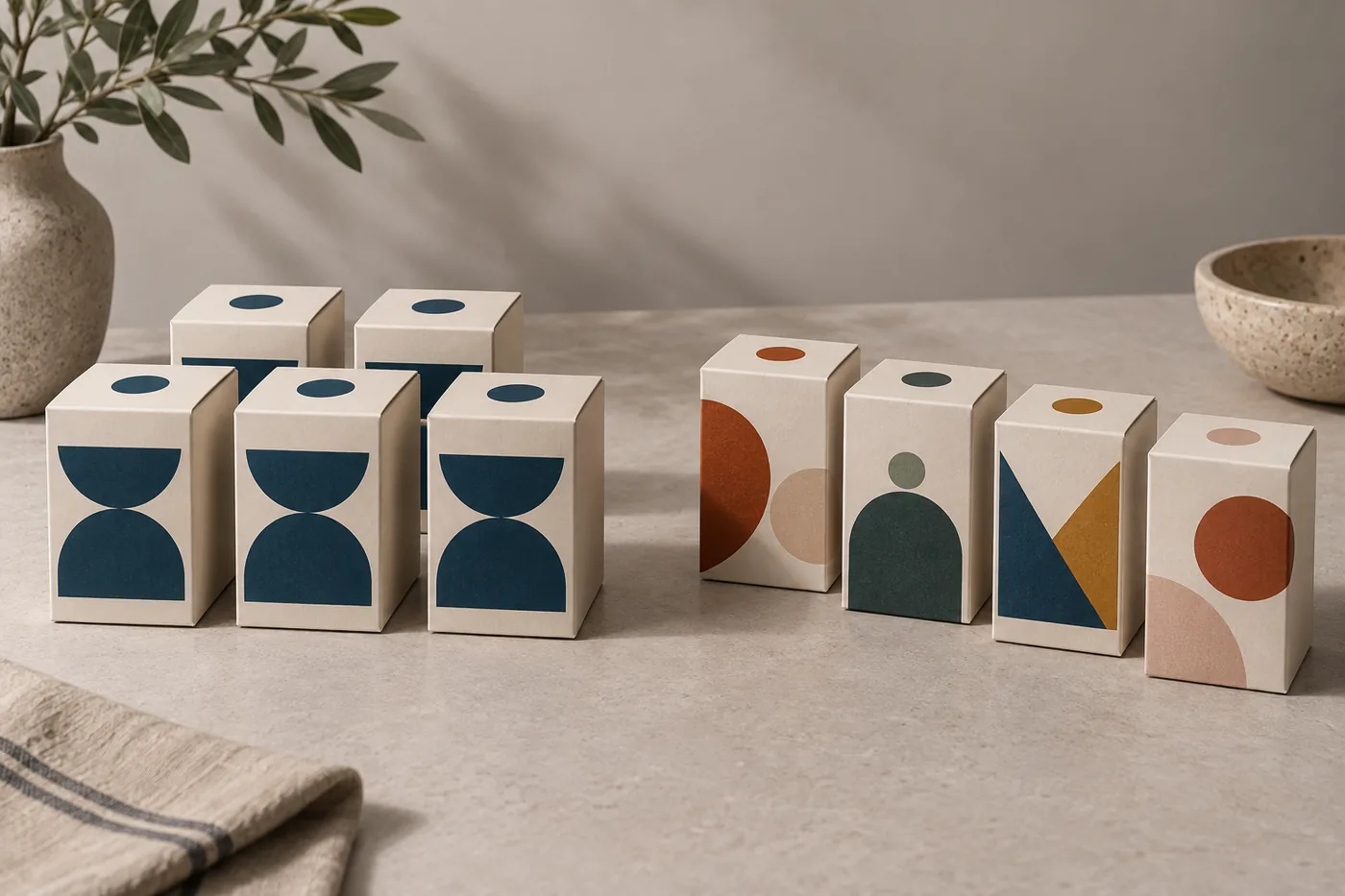 The same subject in many copies, or many different variants: this is where offset and digital diverge.
Materials and finishing steps
The choice of technology must also take the substrate into account: type of paper or board, thickness, format and surface finish must be compatible with the machine and with the desired result. After printing can come lamination, hot foil stamping, varnishing, embossing, die-cutting, creasing and gluing. These steps must be considered from the start, because they require a suitable combination of substrates, inks and finishing materials.
The role of UV LED offset printing
In UV LED offset printing, the inks harden rapidly thanks to the light emitted by the LEDs. This curing reduces drying times and eases the move to the next processes. It is a useful advantage in production planning, especially when the packaging involves several processing stages. Depending on the configuration, it can also reduce or eliminate the use of anti-set-off powder, used to prevent ink from transferring between stacked sheets. The technology also makes it possible to work on low-absorbency substrates, provided they are suitable for the process. On uncoated papers it can help keep colour rendering intense, to be assessed on the chosen material. Fast curing alone, however, is not enough to guarantee every finish: the adhesion of foils, varnishes and adhesives must be verified in relation to the project.
Samples and short runs: when digital helps
A physical sample makes it possible to assess proportions, legibility of the graphics and presentation of the pack before starting production. Digital makes it easier to produce mock-ups, variants to compare and short runs for commercial testing. It can also support the product after launch, with limited reprints or personalised packs. If final production will be in offset, bear in mind that a digital sample may show differences in colour, substrate and finish. It is therefore useful to clarify what is being approved: the structure, the graphics, or the colour rendering too.
How to choose for your project
To find your way between offset and digital, it helps to start from a few pieces of information:
- Quantity: how many packs are needed today, and what reprints are planned?
- Variants: how many different subjects have to be produced?
- Personalisation: are there elements that change from one copy to the next?
- Material and format: which substrate is planned, and at what dimensions?
- Finishes: which finishing and converting steps complete the packaging?
- Timing: when do the packs have to be delivered?
Offset and digital can meet different needs even within the same project. The most cost-effective choice comes from comparing these requirements with the overall cost of the finished product.
Are you setting up a packaging project? Tell us the quantity, format, material and finishing steps you have in mind. On the UV LED offset printing page you will find more about the technology Grafica Nappa uses; to assess your project, write to us.